
Written by Dr Ali Zawwar · Last updated 12 November 2026
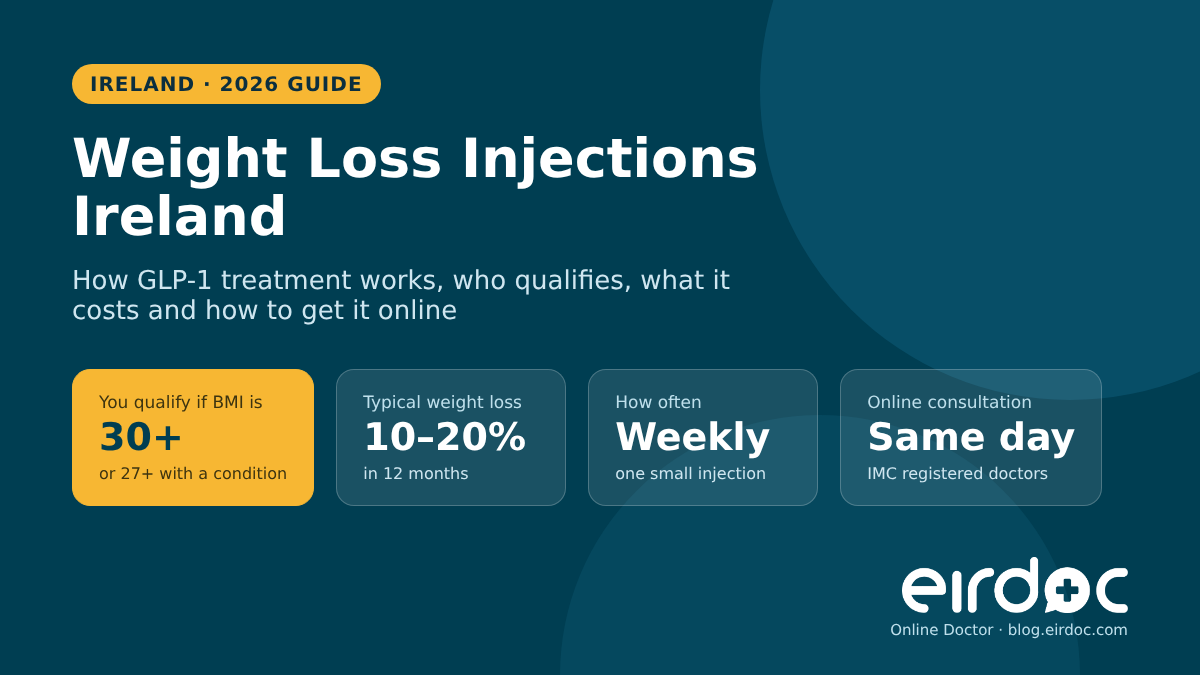
Weight loss injections are once-weekly prescription treatments, known as GLP-1 medicines, that reduce appetite and help people with obesity lose on average 10–20% of their body weight over a year when combined with diet and activity changes. In Ireland they are available on private prescription to adults with a BMI of 30 or more, or 27 or more with a weight-related condition. This guide explains how they work, who qualifies, what they cost, the side effects, and how an online weight-loss doctor prescribes and monitors them.
How weight loss injections work
GLP-1 is a hormone your gut releases after eating. The injections copy it, so you:
- feel full sooner and stay full longer
- think about food less between meals
- have steadier blood sugar, because the stomach empties more slowly
Newer treatments act on a second gut hormone as well, which is why some produce larger weight loss. All of them are taken as a small injection under the skin of the stomach, thigh or upper arm, once a week, with a pen that comes pre-filled. The needle is very fine and most people find it painless after the first time.
Weight loss is gradual: typically 5% of body weight in the first 3 months, 10–15% by 6–9 months, and 15–20% at a year for the strongest treatments. Results vary a lot between people.
Who qualifies in Ireland?
A doctor can prescribe weight loss injections if you are 18 or over and:
| Your BMI | Qualifies? |
|---|---|
| 30 or above | Yes |
| 27 – 29.9 with a weight-related condition (high blood pressure, type 2 diabetes or pre-diabetes, high cholesterol, sleep apnoea, PCOS, fatty liver, osteoarthritis) | Yes |
| 27 – 29.9 with no related condition | Usually no |
| Under 27 | No |
Check your figure with our BMI calculator for Ireland. You will also be asked about your medical history, other medicines, previous weight loss attempts, and whether you are pregnant, breastfeeding or planning a pregnancy — these treatments are not used in pregnancy.
They are not suitable if you have a personal or family history of medullary thyroid cancer or MEN2, a history of pancreatitis, severe gut disease, or an eating disorder. People with type 1 diabetes, kidney disease or on insulin need specialist input.
How much do weight loss injections cost in Ireland?
They are not covered by the medical card or the Drugs Payment Scheme for weight loss (only for type 2 diabetes in some cases), so the cost is private:
| Item | Typical cost |
|---|---|
| Initial online or GP consultation | €39 with Eirdoc; €60–€100 at a private clinic |
| Monthly pen supply from the pharmacy | Roughly €150–€300 a month depending on the treatment and dose; higher doses cost more |
| Follow-up reviews | Included or €[price] with Eirdoc; varies by clinic |
Over a 12-month course the medicine alone usually comes to €2,000–€3,500. Pharmacy prices differ, so it is worth asking two or three. You can claim 20% tax relief on prescribed medicines and consultations through Revenue’s Med 1 process.
Side effects
Most side effects are digestive, worst in the first few weeks and when the dose goes up, and settle as your body adjusts:
- Nausea (the most common — eat smaller meals, avoid fatty food, don’t lie down after eating)
- Constipation or diarrhoea
- Bloating, burping, acid reflux
- Tiredness, headache, dizziness
- Injection-site redness or bruising
Less common but important: gallstones (especially with fast weight loss), low blood sugar if you also take diabetes medicines, and pancreatitis (severe, persistent stomach pain spreading to the back — stop and seek urgent care). Tell your doctor straight away about severe or persistent vomiting, since dehydration can affect the kidneys.
Because the stomach empties slowly, these treatments can affect how other medicines are absorbed, including the contraceptive pill with some products — ask about this at your consultation.
What happens when you stop?
Appetite returns within a few weeks and, without ongoing lifestyle changes, most people regain a large part of the weight within a year. That is why treatment is usually planned for at least 12 months, and why the diet, activity and sleep changes you make during treatment matter more than the injection itself. Some people stay on a maintenance dose long-term; others taper off with support. Your doctor will plan this with you, not stop abruptly.
Injections vs tablets
Prescription weight loss tablets exist too, including an oral version of GLP-1 treatment that is taken daily, and older medicines that reduce fat absorption or appetite. In general:
| Injections (weekly) | Tablets (daily) | |
|---|---|---|
| Average weight loss | 10–20% | 5–12% |
| Side effects | Digestive, dose-related | Depends on the medicine |
| Convenience | Once a week | Every day, some with strict timing |
| Cost | Higher | Usually lower |
Our guide to weight loss medication in Ireland compares the tablet options.
How online prescribing works with Eirdoc
- Book a video consultation and complete a short health questionnaire — height, weight, medical history, current medicines, goals.
- Consult. An Irish Medical Council registered doctor confirms you meet the criteria, checks for anything that rules the treatment out, and discusses what to expect. Blood tests may be requested through your GP or a lab if needed.
- Prescribe. If appropriate, the prescription is sent electronically to the pharmacy of your choice, with instructions on injecting and dose steps.
- Follow up. Reviews at around 4 weeks and then every 1–3 months to check weight, side effects and dose. You can message the clinic between reviews.
- Plan the long term — maintenance, tapering, or stopping — together, once you reach your goal.
Frequently asked questions
How quickly do weight loss injections work? Appetite drops within the first week or two. Noticeable weight loss usually starts by week 4–8 and continues for 9–12 months.
Do I have to diet as well? Yes. The injection makes eating less easier; it does not replace a healthier diet and regular activity. People who change both lose more and keep it off.
Can my GP prescribe weight loss injections? Yes, if you meet the criteria and they are comfortable prescribing them. Many GPs refer to a weight-management clinic or an online service instead.
Are weight loss injections covered by the medical card in Ireland? Not for weight loss. They may be covered for type 2 diabetes. For weight loss the cost is private.
Can I get weight loss injections with a BMI under 27? No. Irish and European guidance sets 27 with a related condition, or 30 without, as the minimum.
Are they safe long-term? They have been used for type 2 diabetes for over 15 years and for weight loss for several years, with good safety data. Regular reviews are still essential.
Think you may qualify?
Check your BMI, then book an online consultation with an Eirdoc doctor to find out whether weight loss injections are a suitable option for you — same-day appointments, Irish Medical Council registered doctors, prescriptions sent straight to your pharmacy. Book now.
Sources
- HSE — Obesity and overweight
- NICE — Overweight and obesity management
- Irish Coalition for People Living with Obesity
This article is for general information only and is not a substitute for individual medical advice.