

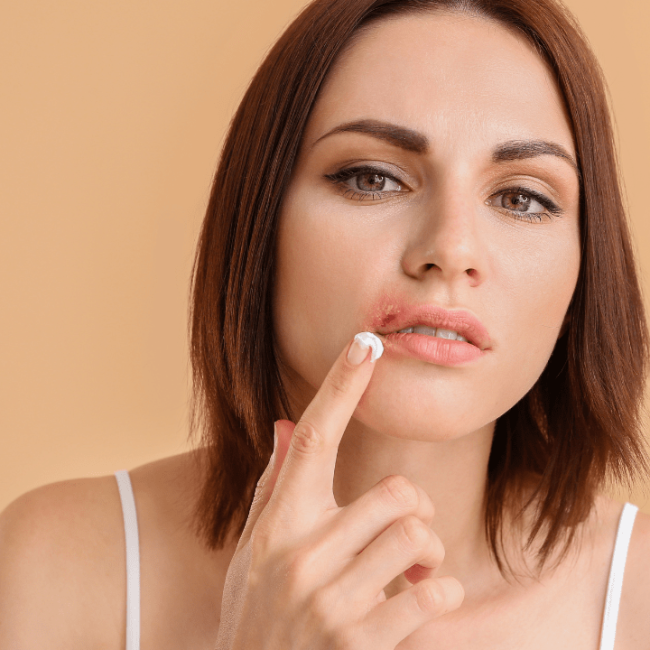
Have you ever been in a situation where your lips start before an important event? And you ask yourself and wonder why the cold sore even returns. You are like many others in Ireland who experience recurring cold sore outbreaks, and you cannot do anything but wait for them to go away or use medications to manage the symptoms.
Cold sores are painful blisters near your lips caused by the highly contagious Herpes Simplex Virus (HSV-1). This is an extremely common condition in Ireland, and around 80% of adults are affected by cold sores. You can observe cold sores commonly in Ireland because of the easy viral transmission and environmental triggers necessary for their transmission.
You do not need to worry about the cold sore because they go away on their own in 1 to 2 weeks. However, you can manage the symptoms and pain through medications and speed up the healing process. Therefore, you are advised to consult your doctor to discuss your condition and prescription for antiviral medications. You can also do it using online doctor services like Eirdoc for convenience, accessibility, and urgent consultation.
Why Does the Same Cold Sore Keep Appearing?
Understanding What Happens After the First Infection
When you have your first-ever cold sore infection, you can have severe symptoms and painful conditions related to your blisters. In some cases, you may experience other symptoms like the flu, fever, and sores inside your mouth. Your first-ever cold sore infection takes time to recover.
However, once your initial infection clears, the main actor, herpes simplex virus (HSV), travels to the nearby nerve cells and stays there for the rest of your life. Herpes simplex virus (HSV) remains dormant and can reactivate at different times. Therefore, recurrence is common.
Why Some People Rarely Get Them While Others Get Them Often
You may have some of your family members or friends who really get cold sores. In comparison, some of them or you get cold sores commonly.
- The primary reason for this difference in getting cold sores is linked to your genetics. If your Cold Sore Susceptibility Gene-1 (CSSG-1) is effective enough to make your immune system suppress the virus, you are least likely to be infected by a cold sore.
- Everyone has a different immune system, and most of us carry HSV-1. However, many people are asymptomatic, which means that their immune system can suppress the cold sore virus attack effectively. Alternatively, your body may develop a strong antibody response, reducing the frequency and severity of cold sores.
- There are some triggers that are different for different people. For instance, the virus inside your body can wake up in response to a specific physical or emotional stressor. This is completely different for different people.
Is It Normal to Get Repeated Cold Sores?
If you are getting repeated cold sores in Ireland, it is extremely common because Herpes Simplex Virus (HSV-1) stays inside you in a dormant position. The cold sore virus only activates under the action of a physical trigger, causing new blisters on the same spot near your lips.
What Causes Cold Sores to Return? Common Triggers in Ireland
The most common question that comes to mind after having cold sores is what causes the cold sores to return. You may be interested to know the common triggers linked with cold sores. The common triggers include
Stress and Busy Daily Routines
If you are someone who has a busy daily routine and experiences work stress, you are most likely to get a cold sore. It is also observed that cold sores become common during high-stress times like exams and any kind of evaluation. However, you can also have cold sores if you have continuous sleep disruptions.
Irish Weather and Seasonal Changes
If you live in Ireland, you can have biting winter breezes that lead to severe lip chapping, acting as a physical trigger for cold sores. Similarly, the Irish weather is dry and cold, causing the lips to get dry and crack quickly. The situation gets worse if you have a winter cold and the flu, causing physical stress on the immune system.
Illness and Lower Immunity
If you are already having a common cold, fatigue, and any other medical condition, you may have a cold sore due to illness and lower immunity. The physical stress on the immune system makes it difficult to combat the cold sore virus.
Everyday Habits That May Play a Role
Cold sores are triggered by everyday habits such as drinking less water than required, lip irritation, and sudden changes in your routines. Dehydration lowers the body’s natural fluid amount, causing the tissues to become dry. Lip irritation, biting the lips, and picking at dry skin can also contribute to the onset of a cold sore.
Could You Spot an Early Stage Cold Sore Before It Appears?
Yes, it is easy to spot the early-stage cold sore before it appears. There are a few signs that people ignore and later have cold sores. The signs include:
- You experience tingling
- You have tightness in the infected area
- You can have mild itching
- You can have sensitivity around the area
Cold sores appear in four distinct stages, giving enough time for development and your observation.
- The first stage is tingling
- In the second stage, blisters appear
- In the third stage, crusting forms around the infected area
- In the final stage, healing begins
What People in Ireland Commonly Try at Home
After having a cold sore, many people become irritated and try cold sore remedies at home. Home cold sore remedies may work sometimes, but only a doctor can advise you professionally in this situation. In this situation, the common remedies include:
Simple Self-Care Habits
It is medically advised to consult your doctor or follow the common self-care habits, such as staying hydrated, avoiding touching the infected part, keeping the lips comfortable, and taking rest to become stress-free.
Myths That Sound Helpful but Usually Aren’t
There are several myths related to cold sores, and people try them at home. They might work for some people, but they usually result in nothing. Some common myths include:
- Using toothpaste on the infected area
- Allowing the infected area to dry excessively
- Using random folk and internet hacks
Setting Realistic Expectations
If you have a cold sore and you want to manage the symptoms, you must consult your doctor for pain management. However, it is wise to remain realistic because the recovery takes 1 to 2 weeks, and there is no immediate guaranteed solution.
Cold Sore Cream and Other Treatment Options
Cold sores typically heal on their own within 7 to 10 days. However, your doctor can advise you to use cold sore creams and antiviral oral medications during the first signs of cold sores, to speed up the healing and reduce pain. Cold Sore creams are effective cold sore treatment because they help manage the symptoms. If you are concerned about how to treat the cold sores, you should immediately seek professional medical advice from your doctor. Your doctor can assess and diagnose the cold sore stage and guide you according to your condition. If you need urgent assessment and prescription, you can use online doctor services like Eirdoc for consultation and medical advice.
Conclusion
Cold sores are unpredictable, and they can appear at any time. There is no cure for cold sores, and you cannot expect them to go away immediately using medical interventions. However, you can manage the symptoms, pain, and swelling using cold sore cream and home remedies, as advised by your doctor. If you get frequent cold sores, you need to see your doctor and discuss your condition to understand the underlying causes of recurrence. Only your doctor can advise you on the prevention and your personal triggers that lead to cold sores.
-
What causes cold sores to come back?
Herpes Simplex Virus (HSV-1) is a cold sore-causing virus that stays inside you and can reactivate to cause cold sores under the influence of physical triggers like stress, illness, environment, and personal triggers.
-
What is the first sign of an early-stage cold sore?
The first sign of an early-stage cold sore is the tingling and itching around the infected area. This area near your lips becomes sensitive before a blister appears, and the underlying stages of cold sore development start.
-
Are home cold sore remedies enough?
Yes, home remedies are enough to manage the cold sores because they go away on their own. However, home cold sore remedies do not treat or cure the cold sore, but help in soothing the pain.
-
When should I speak to a doctor in Ireland?
You should speak to your doctor in Ireland if you are concerned about your frequent cold sores. You can also see professional and medical advice if you want to manage the symptoms and get relief from pain.